


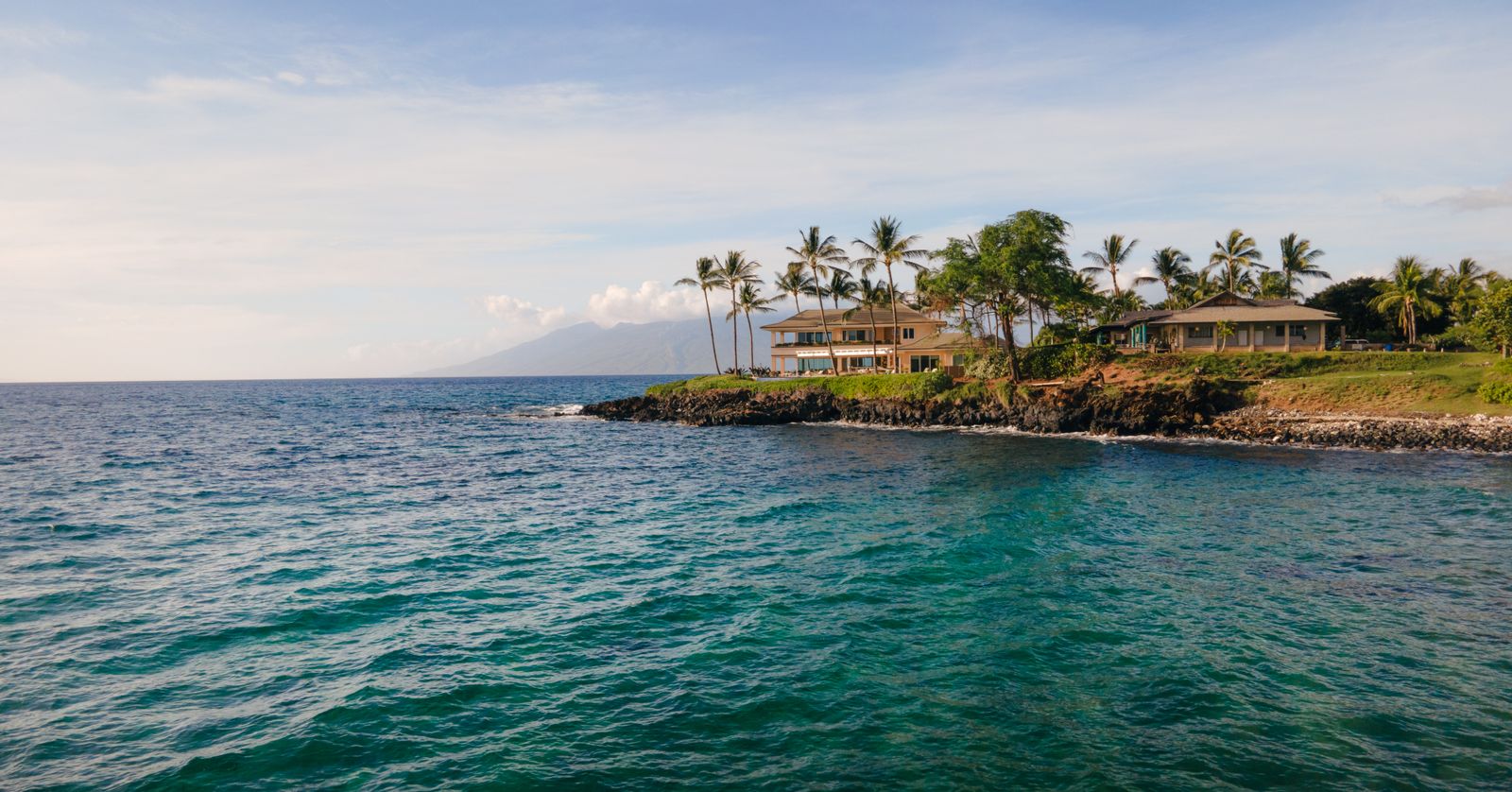
After 17 years living and selling on Maui, I’ve learned that buying here from the mainland rarely goes sideways for the reasons people fear. Distance isn’t the real obstacle. In May 2026, the island’s single-family median settled at $1,174,500, down about 9% from a year earlier (Maui Now / RAM, June 2026). Yet the luxury tier I work in, Wailea and Mākena, moves on its own quieter timeline and doesn’t track that island-wide number closely. Most of my mainland clients close without ever standing in the home first. This guide walks you through how that actually works, from assembling your island team to the due diligence that protects a coastal property. Let’s start with what makes Maui genuinely different from anywhere you’ve bought before.
- Maui’s single-family median was $1,174,500 in May 2026, down roughly 9% year over year (Maui Now / RAM, June 2026), but the $3M+ luxury tier moves on its own, often all-cash and less tied to the island median.
- Mainland buyers routinely close remotely using live video walkthroughs, secure e-signature, and a mobile notary, without ever setting foot on-island.
- Your first move is a local team: a Maui buyer’s agent, a Hawaii-licensed lender, a local title and escrow company, and an island-experienced inspector.
- Confirm fee simple versus leasehold early, and budget for higher non-owner-occupied property taxes plus HARPTA withholding when the seller isn’t a Hawaii resident.
- Much of Maui’s finest inventory sells off-market, before it’s ever publicly listed.
What makes buying a home on Maui different?
Buying on Maui differs from the mainland in three big ways: much of the best inventory never reaches public portals, coastal properties carry island-specific rules like shoreline setbacks and Special Management Area review, and land ownership can be fee simple or leasehold. Understanding these before you shop saves you time, money, and heartache.
The lifestyle side draws almost everyone I meet. Sunset from a Wailea lānai, mornings snorkeling off Mākena, the slower rhythm of island life in your 50s and 60s. That part sells itself. The mechanics underneath are where mainland buyers need a guide, and where a good one earns their keep.
Then there’s the practical reality. A home here is a coastal asset in a marine environment, and it’s governed by Hawaii and Maui County rules that simply don’t exist in Denver or Dallas. Salt air, shoreline setbacks, and the fee simple versus leasehold question all shape what you should buy. None of it is scary once you know to look, which is exactly what the rest of this guide is for. If you’d rather start with the essentials, my buyer services overview lays out how I work with mainland clients.
The Maui luxury market in 2026
Maui’s single-family median was $1,174,500 in May 2026, down roughly 9% year over year, with homes taking a median 132 days to sell across 58 recorded sales (Maui Now, reporting Realtors Association of Maui data, June 2026). The condo median sat at $597,000. The luxury tier I work in, though, tells a different story than those headline figures.
Here’s the nuance the numbers miss. Those medians describe the whole island, entry-level condos in Kīhei included. The $3M-plus market in Wailea and Mākena isn’t broken out in the monthly reports, and it behaves differently. Volume is thinner. Deals are frequently all-cash. And prices at this level track global wealth and inventory scarcity far more than they track the island-wide median. So a softer countywide number doesn’t automatically mean a softer trophy market.
| Metric (May 2026) | Figure |
|---|---|
| Single-family median price | $1,174,500 |
| Median price, year over year | Down ~9% |
| Days on market (median) | 132 |
| Single-family sales | 58 |
| Condo median price | $597,000 |
What does that mean for you as a buyer? At the high end, you’re negotiating against a small, uneven set of comparable sales, not a smooth trend line, so judgment matters as much as any spreadsheet. If you’re weighing values here or timing a mainland sale against your purchase, my guide to what a Maui home is worth walks through how luxury pricing actually works.
How do I buy a Maui home remotely from the mainland?
You buy remotely by assembling a local team and letting them be your eyes and hands. Live narrated video walkthroughs are standard, the inspection period typically runs about 14 days, and closing happens through secure e-signature and a mobile notary (The 808 Team, 2026). Many of my clients close without ever flying in.
Let me walk you through how it actually feels. Once we identify a home, I record a live, narrated walkthrough, not a polished listing video, but a real-time tour where you can ask me to open the water heater closet, check the ocean view from the primary suite, or linger on the lānai railing to inspect it for corrosion. We do this over a video call, so you’re effectively in the room with me, asking the questions you’d ask in person.
From there, the rhythm is familiar. We write the offer, and once it’s accepted you’ll generally have around a 14-day inspection period to complete due diligence (The 808 Team, 2026). Escrow on Maui usually runs about 30 to 60 days from acceptance to closing (Hawaii Life). When it’s time to sign, secure e-signature plus a mobile notary who comes to you means you can close from your living room in Seattle or Scottsdale. If you’re relocating rather than buying a second home, my relocation support covers the pieces beyond the transaction itself.
How do I build the right local team?
Your team is really four people: a Maui buyer’s agent who knows the micro-markets, a Hawaii-licensed lender who has actually closed loans in the islands, a local title and escrow company, and an island-experienced home inspector. Each one prevents a specific, expensive mistake that mainland-only professionals routinely miss (The 808 Team, 2026).
A Maui buyer’s agent
This is your quarterback. Beyond finding homes, a local agent knows which streets flood, which associations have pending assessments, and which sellers might entertain a quiet off-market offer. This is the role I fill for my clients, and it’s the one that shapes every other decision you make.
A Hawaii-licensed lender
Financing in Hawaii has quirks, leasehold properties, jumbo loans, and condo project approvals among them, that trip up mainland lenders. Work with someone who has closed Hawaii loans before, not someone learning the state’s rules on your deal and your timeline.
A local title and escrow company
In Hawaii, neutral escrow and title companies manage the closing. They also handle the HARPTA withholding paperwork when your seller isn’t a Hawaii resident. A local team does this every single week, so a step that sounds intimidating becomes routine.
An island-experienced inspector
Salt air, wind-driven corrosion, and termites behave differently here than anywhere on the mainland. An inspector who knows Maui construction spots the issues a generalist walks right past, and that early knowledge protects both your budget and your peace of mind.
Fee simple versus leasehold on Maui
Fee simple means you own both the home and the land it sits on. Leasehold means you own the home but lease the land for a set term, which affects financing, resale, and value. On Maui, leasehold shows up mostly in resort-area condos, and rarely in single-family homes, so most estate buyers never encounter it.
Still, this is the first thing I confirm on any property, because the difference is significant. A leasehold’s remaining term and lease rent can materially change what a home is worth and how a lender treats it. Here’s the short version, side by side.
| Fee simple | Leasehold | |
|---|---|---|
| What you own | Home and land | Home only; land is leased |
| Financing | Standard | Can be harder; term matters |
| Common on Maui | Single-family homes | Some resort-area condos |
This topic deserves more than a paragraph, so I wrote a full breakdown. If you’re considering a resort condo, read my deep dive on fee simple versus leasehold in Hawaii before you write an offer.
What does it really cost to own a home here?
Beyond the purchase price, two costs surprise mainland buyers most. Maui County taxes non-owner-occupied second homes at much higher rates than owner-occupied homes, with no homeowner exemption. And if your seller isn’t a Hawaii resident, HARPTA requires that 7.25% of the sale price be withheld at closing, with the buyer named as the withholding agent.
The property-tax gap matters because most of my luxury buyers are purchasing a second home, not a primary residence. Without the owner-occupant exemption, your annual tax bill can run meaningfully higher than a comparable owner-occupied home nearby. It’s not a reason to hesitate, just a number to plan for while you’re setting your budget.
HARPTA catches people off guard too. When you buy from a non-resident seller, 7.25% of the purchase price is withheld at closing, and technically you, the buyer, are the withholding agent. In practice, your escrow and title team handles the paperwork, so you don’t have to become a tax expert overnight. I break down every recurring cost, taxes, insurance, association dues, and maintenance, in my full guide to what it costs to own a Maui home.
How do I find the best homes before they list?
You find them through relationships, not portals. Much of Maui’s ultra-prime inventory trades privately, before it’s ever publicly listed. As the #1 Compass agent in Hawaii by volume, I regularly reach homes that never appear on Zillow or Redfin, and I bring my buyers in before the wider market ever sees them.
At the top of the market, discretion is the norm. Sellers of trophy properties often don’t want a public listing, with the showings, the speculation, and the neighbors watching. So these homes move quietly, agent to agent, within a small circle of people who know one another. If you’re only watching the public portals, you’re seeing a fraction of what’s actually available on any given week.
This is where working with a deeply connected local agent changes your options entirely. Because of my position at Compass and 17 years of relationships on this island, I hear about homes early, sometimes before the owners have fully decided to sell. You can browse my private exclusive listings, and I’ll also match you to properties that never make any public list at all.
What island due diligence matters most?
Island due diligence goes beyond a standard inspection. Confirm fee simple versus leasehold, check shoreline setback and Special Management Area rules for anything near the water, and verify flood and tsunami evacuation zones along with insurance availability. Salt air, wind-driven corrosion, and termites deserve close attention too, since they behave differently here.
| What to verify | Why it matters |
|---|---|
| Fee simple vs leasehold | Affects financing, resale, and long-term value |
| Shoreline setback and SMA rules | Govern building and renovation on oceanfront and near-shore parcels |
| Flood and tsunami evacuation zones | Drive insurance cost and availability |
| Salt air and wind corrosion | Accelerate wear on metal, fixtures, and systems |
| Termites | Common in island construction; needs a specialist inspection |
A couple of these deserve a closer look. The Special Management Area, or SMA, is a coastal zone where Maui County reviews building and renovation more closely. If you dream of adding a pool or a new lānai to an oceanfront home, SMA rules may shape what’s possible, so we confirm them before you commit rather than after.
Insurance is the other item I flag early. For properties in flood or tsunami evacuation zones, coverage can be more expensive or harder to secure, and that affects both your budget and your financing. We check availability during your inspection period, not after you’ve closed and moved your furniture across an ocean.
Working with Chelsea
I’ve spent 17 years living and selling on Maui, and I’m currently the #1 Compass agent in Hawaii by volume and ranked #13 statewide (WSJ/RealTrends). For mainland buyers, that translates into early access to off-market homes, a vetted local team, and someone who has guided this exact remote process many times over.
Experience turns a long-distance purchase into a calm, orderly one. There’s a real difference between an agent who occasionally sells here and one who lives the market every day, and at this level that difference shows up in your price and your protection.
My promise to mainland buyers is simple. I’ll be your eyes on the ground, your advocate at the negotiating table, and your steady hand through escrow, whether you fly in for every showing or never leave home until closing. If you’re just starting, my buyer services page is the place to begin, and if you’re moving your whole life rather than buying a getaway, my relocation support covers the rest.
Many of my clients are selling a mainland home to make this move. If that’s you, my luxury seller’s guide can help you time both sides of the transaction so the two closings work together instead of against each other.
Frequently Asked Questions
Can I buy a home on Maui without visiting in person?
Yes, and many of my clients do. With live narrated video walkthroughs, secure e-signature, and a mobile notary who comes to you, buyers routinely close without setting foot on-island (The 808 Team, 2026). I act as your eyes on the ground throughout the entire process.
How long does escrow take on Maui?
Escrow generally runs about 30 to 60 days from an accepted offer to closing (Hawaii Life). Within that window, you’ll typically have around a 14-day inspection period to complete due diligence. All-cash luxury deals can move faster when both sides are ready to go.
What is HARPTA, and does it affect me as a buyer?
HARPTA is Hawaii’s law requiring 7.25% of the sale price be withheld at closing when the seller isn’t a Hawaii resident. Technically the buyer is the withholding agent, but your escrow and title team handles the paperwork, so it rarely becomes your burden. My cost-of-ownership guide explains it further.
Should I worry about leasehold when buying a Maui home?
For single-family homes, rarely. Leasehold shows up mostly in resort-area condos. Still, always confirm fee simple versus leasehold before you make an offer, because it affects financing, resale, and value. My full guide on fee simple versus leasehold walks through the details.
Why are property taxes higher on a second home?
Maui County reserves its lowest tax rates for owner-occupied homes and gives them a homeowner exemption. A second home is taxed at non-owner-occupied rates with no exemption, so your annual bill runs higher. My cost-of-ownership guide breaks down the numbers in detail.
How do I see homes that aren’t listed online?
Much of Maui’s ultra-prime inventory sells privately, before it’s ever publicly listed. Working with the #1 Compass agent in Hawaii by volume gives you early access. I share private exclusive listings and match buyers to homes that never hit the portals at all.
Ready to start your Maui search?
Buying a luxury home on Maui from the mainland is far more approachable than most people expect. Build the right local team, confirm fee simple versus leasehold, plan for island-specific taxes and due diligence, and lean on relationships to reach the off-market homes. Then let someone who has done this many times guide the rest of the way.
When you’re ready, I’d love to hear what you’re looking for. Start with my buyer services, tell me about your timeline and your must-haves, and I’ll begin matching you to homes, listed and unlisted, that fit your life here. Maui has a way of feeling like home long before you’ve closed. Let’s find yours together.
Chelsea Dimin is the #1 Compass agent in Hawaii by volume and ranked #13 statewide (WSJ/RealTrends), with more than $300 million in sales and 17 years living and working on Maui. The first woman to sell a $32M+ property on the island, she specializes in luxury homes across Wailea, Mākena, and South Maui. License #RB-22400.