


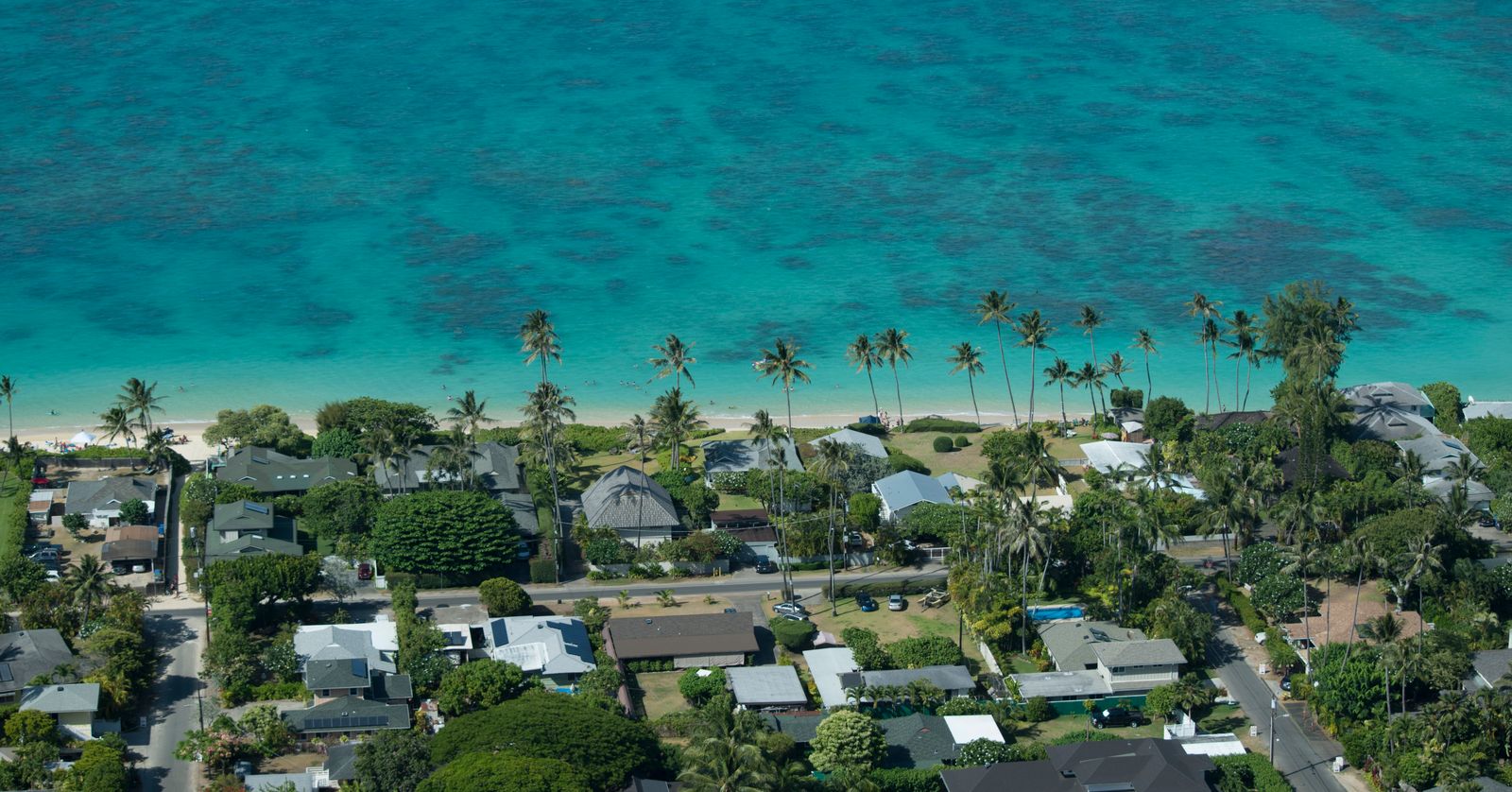
Owning a home on Maui costs more than the mortgage, and how much more comes down to one word: use. A primary residence with the homeowner exemption sheds $300,000 in taxable value and sits in the lowest tax class. A comparable second home pays a higher class with no exemption at all (County of Maui). Then come insurance, upkeep, community fees, and withholding rules that can catch a buyer off guard.
- Maui taxes property by use. An owner-occupied primary home pays the lowest rate, while a second home pays multiples with no homeowner exemption (County of Maui).
- The homeowner exemption cuts $300,000 from taxable value and reclassifies the home, and a second home never qualifies.
- Hawaii’s 4.5% GET is a business tax, not a sales tax on buying your home.
- Off-island sellers can make you the withholding agent: HARPTA is 7.25% and FIRPTA is 15%.
What does it really cost to own a home on Maui?
The cost of owning a home on Maui falls into four ongoing buckets beyond your loan: property taxes, insurance, maintenance, and community fees. Property tax is the biggest variable. A primary home with the exemption trims $300,000 off taxable value (County of Maui), while a second home pays a higher rate on the full value.
Here’s the pattern I see with mainland buyers. They plan carefully for the purchase price, then get surprised by the annual carrying cost. On a second home, that number is driven mostly by the property tax classification, which I’ll break down next. The other three buckets are steadier, but they still matter, especially for oceanfront and resort-community homes.
If you’re buying from the mainland, read this alongside my guide for mainland buyers, which covers the wider process. This post zooms in on the carrying costs.
How do property taxes work on Maui?
Maui County taxes real property by classification, not one flat rate. The County of Maui sets separate rates each fiscal year for owner-occupied homes, second homes, long-term rentals, and short-term rentals. Owner-occupied primary residences pay the lowest rate. Non-owner-occupied second homes pay substantially more, often several multiples of the owner-occupied rate, with no homeowner exemption.
Owner-occupied versus a second home
This is the distinction that matters most for a mainland buyer. If Maui is your principal residence and you hold an approved home exemption, you sit in the owner-occupied class at the lowest rate. If it’s a home you visit a few weeks a year, the County classifies it as non-owner-occupied, and you pay a higher rate on the full assessed value. That gap, not the sticker price, is what surprises people.
Rental classifications
Two more classes exist for owners who rent. A long-term rental, leased for a year or more, pays a moderate rate and earns a separate $200,000 long-term-rental exemption (County of Maui). A short-term rental pays the highest residential rates. If renting is part of your plan, the lease term changes both your tax class and your math, so decide your use before you close.
Maui’s property tax classes at a glance
Here’s the shape of it without rates, since those reset every year:
| Classification | Homeowner exemption? | Relative rate |
|---|---|---|
| Owner-Occupied (principal residence) | Yes: $300,000 off value plus reclassification | Lowest |
| Non-Owner-Occupied (second home) | No | Substantially higher (multiples) |
| Long-Term Rental (1-year-plus lease) | Separate $200,000 exemption | Moderate |
| Short-Term Rental | No | Highest residential |
One habit from my side of the closing table: I never quote a buyer last year’s rate. The schedule resets on July 1, and the FY2026-27 rates took effect July 1, 2026. Secondary websites often lag a year behind, which is how buyers end up with the wrong number in their spreadsheet. Always build your budget off the County’s current schedule.
What is the Maui homeowner exemption, and do I qualify?
The Maui homeowner exemption does two valuable things: it removes $300,000 from your home’s taxable assessed value and reclassifies the property into the lower owner-occupied class (County of Maui). For a mainland buyer keeping a second home, neither benefit applies. That’s the single biggest reason a second home costs more to hold each year.
Who qualifies?
The County sets clear conditions. You must occupy the home more than 270 days a year, and you can’t rent the entire premises to someone else. You also need to have filed a Hawaii resident income tax return with a Maui County address the prior year, and your property taxes must be current, not delinquent (County of Maui).
When to file
Timing catches people. The claim deadline is December 31 of the year before the assessment year, so you file ahead of the tax year you want it to cover. If you’re moving to Maui full-time, calendar that date the moment you close. Miss it, and you wait another full cycle for the savings. My buyer resources can help you map the steps.
Do I pay Hawaii GET when I buy a home?
No, and this is a myth I correct almost weekly. Hawaii’s General Excise Tax runs 4.0% by the state plus a 0.5% Maui County surcharge, for 4.5% effective (Hawaii Department of Taxation). GET is a tax on business gross income, not a sales tax you pay when you buy a home to live in.
Where does GET actually apply? To business activity. Rental income and real-estate commissions are the common examples, so if you buy a Maui home and rent it out, that rental income is generally subject to GET. But an individual selling their own home is treated as an occasional or casual sale, which is excluded. And there’s no GET charged to you on the purchase itself. A buyer isn’t handing over a 4.5% sales tax at closing.
What about the conveyance tax?
Hawaii does levy a separate conveyance tax on property transfers, so you may see a line for it on your settlement statement. It’s distinct from GET. I won’t quote a rate here, because it’s the kind of figure that should come straight from your escrow officer or CPA for your specific transaction. The takeaway is simple: it exists, it’s separate from GET, and your closing team will show you the exact amount.
What are HARPTA and FIRPTA, and who handles them?
When you buy from a seller who lives off-island, you can become the withholding agent, and this one catches buyers off guard. HARPTA withholds 7.25% of the sale price when the seller isn’t a Hawaii resident (Hawaii Department of Taxation), and FIRPTA withholds 15% when the seller is a foreign person (IRS).
Read the responsibility twice, because it surprises people: the buyer is legally the withholding agent, and can be held personally liable if the tax isn’t withheld and sent to the state or the IRS. In practice, your escrow and title team handles the mechanics, which is one more reason to work with an experienced local closing team. This is not a place to improvise.
When both apply
A foreign seller can trigger HARPTA and FIRPTA at the same time, which stacks to as much as roughly 22.25% of the sale price held back. Here’s the part that calms buyers down: these are the seller’s prepayments toward their own tax, not an extra cost you pay as the buyer. Still, understand them, because they shape the closing and the seller’s net proceeds.
One day you may go from buyer to seller. When that day comes, HARPTA applies to you as a non-resident, and there’s real planning around capital gains and 1031 exchanges. I walk through all of it in my Maui seller’s tax guide.
Insurance, maintenance, and resort fees to plan for
Beyond taxes, three recurring costs round out the budget: insurance, maintenance, and community fees. None come with a single published rate, because each depends on your specific home, but every South Maui owner should plan for all three. Oceanfront and near-shore properties tend to carry the heaviest insurance and upkeep.
Insurance and the water
Insurance is where coastal Maui differs from the mainland. Homes near the ocean can face higher hazard and homeowners premiums, and the coverage terms matter as much as the price. Get real quotes early, ideally during your due-diligence period, so the number lives in your budget before you’re committed, not after.
Maintenance in a salt-air climate
Salt air and wind are hard on a house. Metal fixtures, finishes, HVAC, and exterior surfaces all wear faster near the coast, so I tell buyers to budget for upkeep as a when, not an if. A well-kept South Maui home is a joy to own. A neglected one gets expensive quietly, then all at once.
HOA and resort-community fees
Many of the homes and condos in Wailea and Mākena sit inside HOAs or resort communities with monthly or quarterly dues. Those fees can cover amenities, grounds, security, and sometimes shared insurance, and they vary widely from one community to the next. Before you buy, always ask for the current dues, the reserve study, and any pending special assessments.
Frequently Asked Questions
Does a second home on Maui pay higher property taxes than a primary residence?
Yes. Maui classifies a second home as non-owner-occupied, which pays substantially more than the owner-occupied class, often several multiples of that rate, and it gets no homeowner exemption (County of Maui). Rates reset each July 1, so confirm the current schedule before you budget.
How much does the Maui homeowner exemption save?
The exemption removes $300,000 from your home’s taxable assessed value and reclassifies it into the lower owner-occupied tax class (County of Maui). To qualify, you must occupy the home more than 270 days a year and meet the County’s residency and filing conditions. A second home never qualifies.
Do I pay GET or a sales tax when I buy a home on Maui?
No. Hawaii’s General Excise Tax is 4.5% effective on Maui, which is 4.0% state plus a 0.5% county surcharge, but it applies to business income, not to buying a home to live in (Hawaii Department of Taxation). Selling your own home is an excluded occasional sale.
What is HARPTA withholding, and who is responsible for it?
HARPTA is Hawaii’s withholding on sales by non-resident sellers, at 7.25% of the sale price (Hawaii Department of Taxation). The buyer is legally the withholding agent and can be personally liable, so your escrow and title team should handle it. It’s the seller’s prepayment, not an extra buyer cost.
What is FIRPTA, and can it stack with HARPTA?
FIRPTA is the federal version: 15% withholding when the seller is a foreign person (IRS). A foreign seller can trigger FIRPTA and HARPTA at once, stacking to roughly 22.25% of the sale price. Both are seller prepayments toward tax, handled through escrow.
When is the deadline to file for the Maui homeowner exemption?
The claim deadline is December 31 of the year before the assessment year you want it to apply (County of Maui). If you’re moving to Maui full-time, file as soon as you close so you don’t lose a full cycle of savings. See my mainland buyer’s guide for the wider process.
The bottom line
The real cost of owning a home on Maui comes down to how you’ll use it. Live here full-time, claim the homeowner exemption, and your carrying cost stays lower. Keep a second home, and you’ll pay a higher tax class with no exemption, plus insurance, upkeep, and community fees. The withholding rules mostly affect sellers, but as a buyer you’re the legal agent, so lean on your escrow team.
My job is to help you see these numbers clearly before you fall for a lānai view. I’m a REALTOR®, not a tax professional, so for your specific situation, please confirm the current figures with the County of Maui and a Hawaii-licensed CPA. When you’re ready to look at homes, my buyer resources are a good next step.
Chelsea Dimin is the #1 Compass agent in Hawaii by volume and ranked #13 statewide (WSJ/RealTrends), with more than $300 million in sales and 17 years living and working on Maui. The first woman to sell a $32M+ property on the island, she specializes in luxury homes across Wailea, Mākena, and South Maui. License #RB-22400.